
Loading page…

Why Next.js fits company sites and web applications
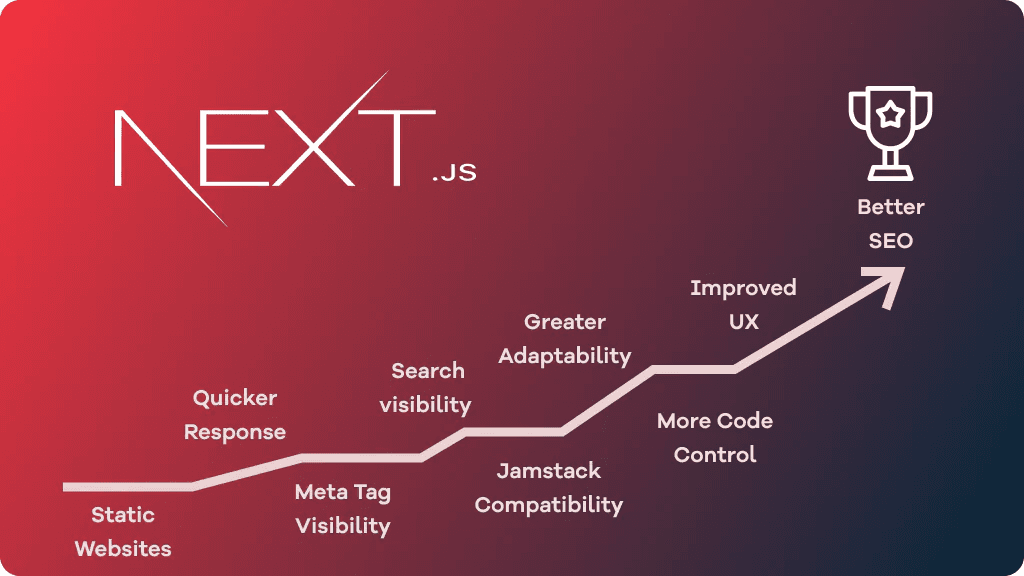
Next.js is a React framework that became a default pick for teams doing website development or shipping a web application with SEO and performance constraints. It is not magic — it is structure.
Server rendering where it matters
For a company website, HTML that already contains real content helps:
- crawlers read text without waiting for a heavy client boot,
- users on slower networks get readable UI earlier.
The Next.js App Router gives you primitives to split server work vs client-only islands — which directly feeds Core Web Vitals.
Routing, layouts, i18n
Real projects want:
- clean nested routes,
- layouts that share chrome (header/footer),
- often multiple locales (
/en/...,/el/...).
That is everyday web development for businesses — and Next.js (plus libraries like next-intl) cuts bespoke routing glue.
TypeScript and maintenance
TypeScript reduces whole classes of bugs across forms, API clients, and shared components. For a long-lived web application, that is cash: fewer panic deploys, safer refactors.
When it is not the right default
- You already have a stable CMS + theme and do not want a custom app layer.
- The deliverable is literally one static page with no dynamics — an even simpler static pipeline might win.
Takeaway
For website development and web apps on Next.js + React + TypeScript, the upside is delivery quality and speed: SEO-friendly defaults, performance headroom, clear architecture. The final decision still belongs to the customer problem — the framework is a tool, not a brand personality.