Loading page…
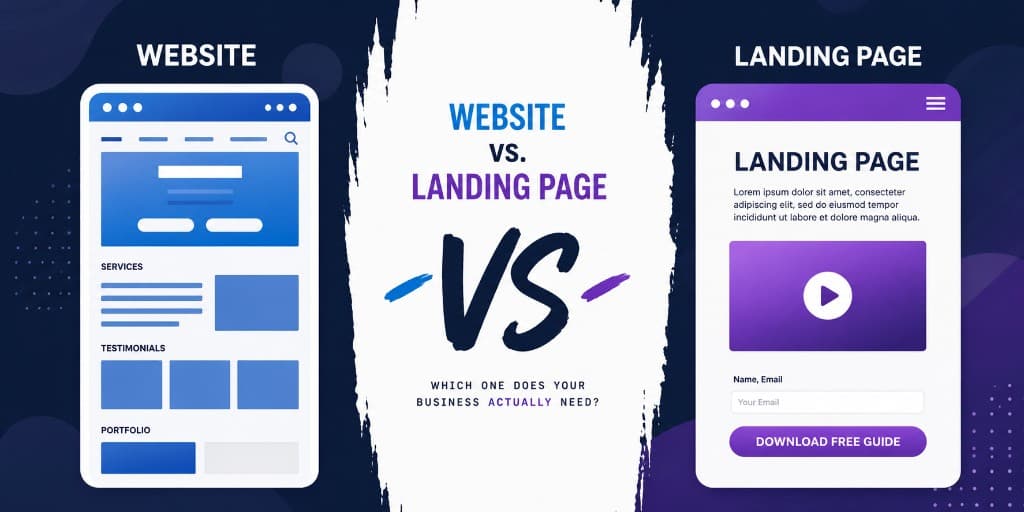
Landing page vs full company website: how to choose
Many teams ask for “a site” without clarifying whether they need a landing page or a full company website. That choice affects budget, timeline, SEO, and how you measure success.
What a landing page actually is
A landing page usually optimizes for one primary action:
- book a demo,
- schedule a call,
- download a lead magnet,
- buy a single SKU.
It pairs tightly with campaigns (ads, email) and prefers tighter copy, fewer paths, and faster iteration.
What a corporate site provides
A company website (even a small but complete corporate site) answers more trust questions:
- who you are,
- what services you deliver,
- how you work,
- where you operate,
- how to contact you seriously.
For web development in B2B or industrial contexts, that often means multiple pages (services, selective case studies under NDA rules, technical blog).
SEO: what ranks more easily
- One landing can rank for 1–2 primary intents if content and backlinks align.
- A structured site (clean URLs, internal linking, blog) collects long-tail intent over time and compounds domain signals.
There is no universal winner — there is a goal.
Start with a landing when
- you sell a narrow offer and need fast leads from paid traffic,
- you want A/B tests on headline/CTA without touching the whole brand surface,
- the brand lives elsewhere (marketplace, app) and you only need one door.
Build a full site when
- buyers research before the call (common in website development services),
- you want organic traffic across many keywords, not only ads,
- you have multiple services that deserve distinct pages.
Takeaway
Website development is not one-size-fits-all. Begin from user intent: if you need one conversion from traffic, ship a landing. If you need trust + SEO breadth, invest in a site with clear information architecture and a solid technical base (speed, metadata, schema) from day one.